 Samagri & products
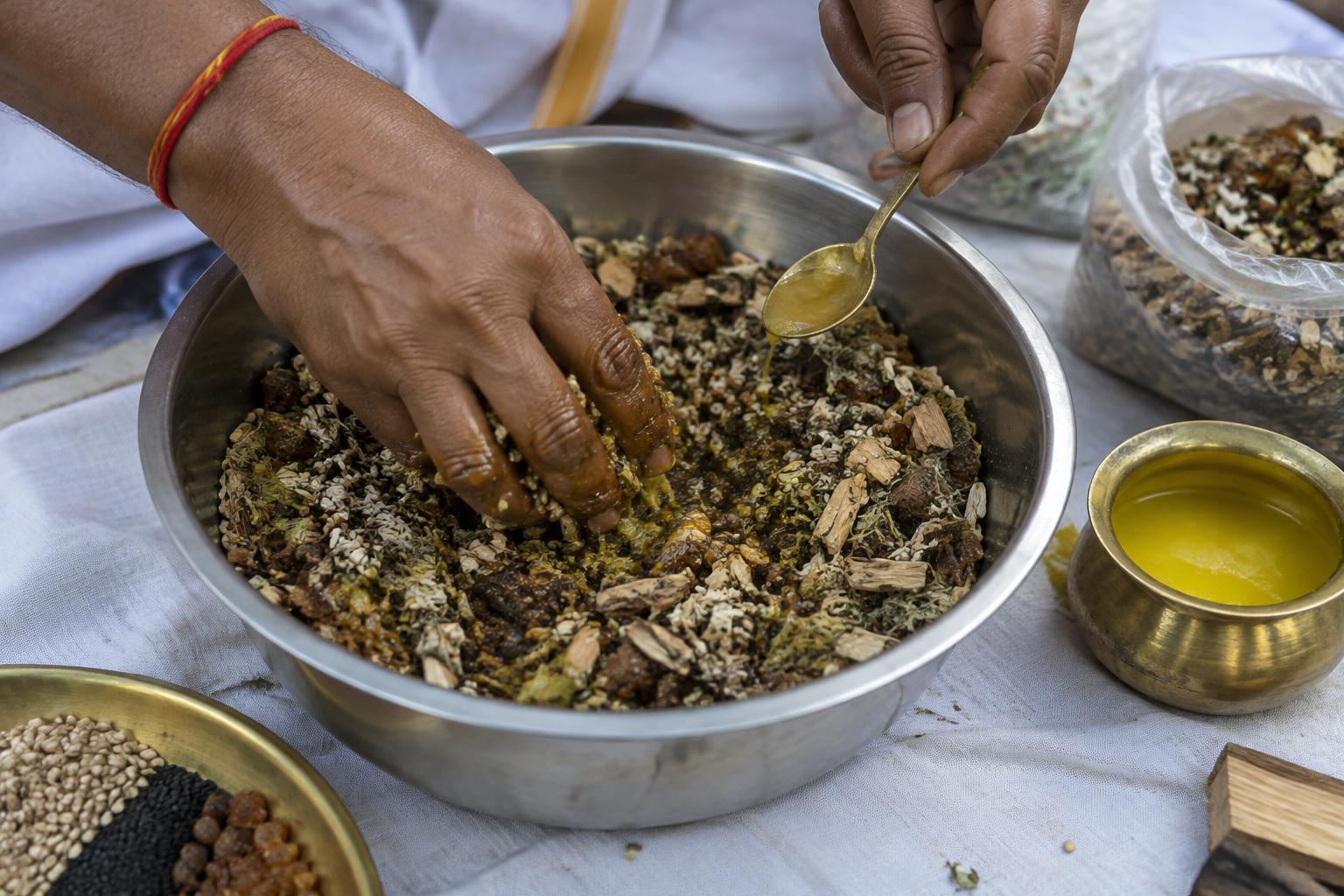
Hawan Samagri: What It Contains, How Much to Use and How to Use It
Hawan samagri explained: what it is made of, how much you need, how to offer it, and the other items needed for a havan.
Read guidePanditji at your home across India, or live on video anywhere in the world. Book Panditji


Samagri & products
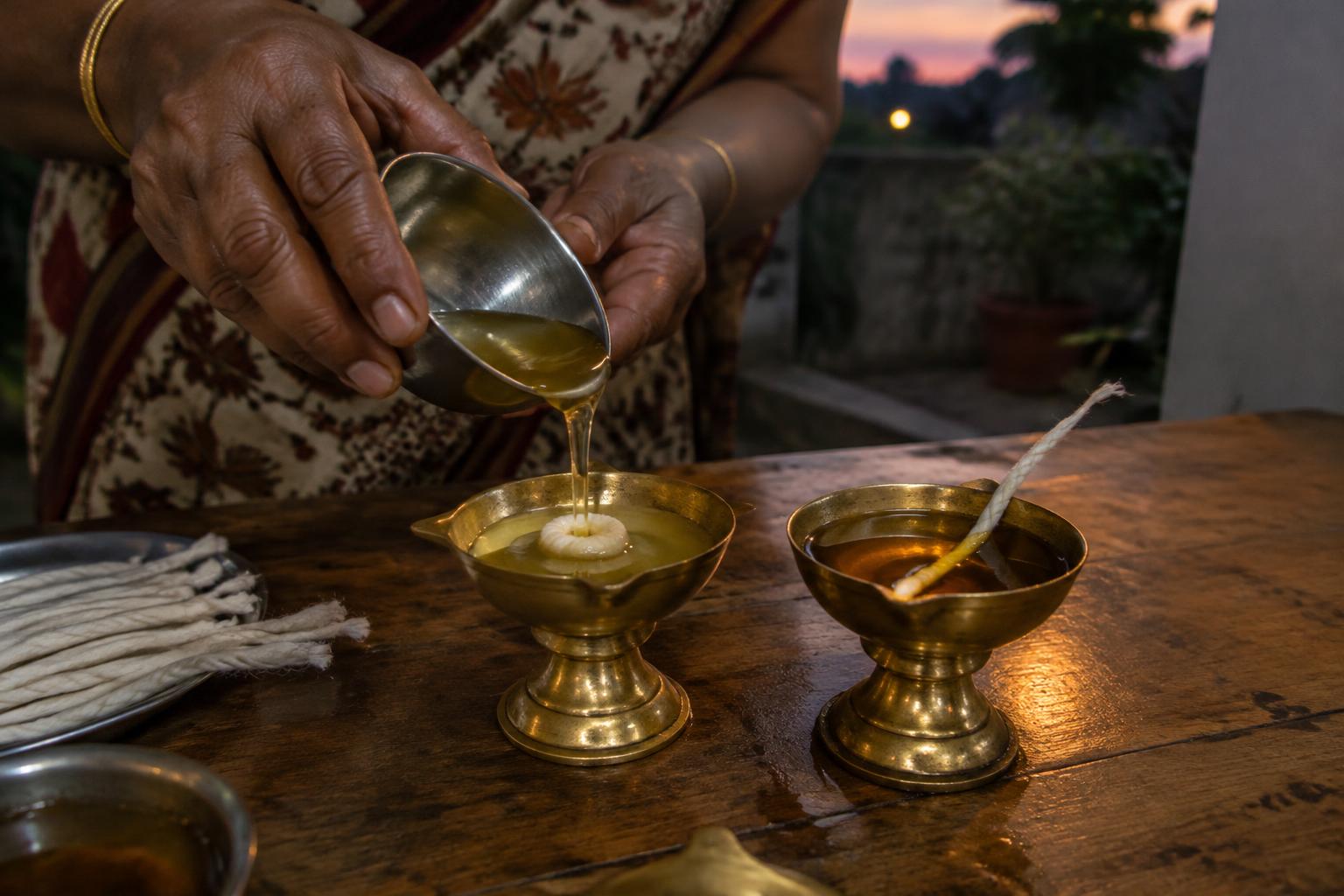
The diya is lit in every puja, so a common question is what to fill it with. The answer depends on the deity, the occasion and your family custom. All three are accepted, and the tips below help you choose and keep the flame clean.
Our desi ghee for pooja is made for this purpose.
| Occasion | Commonly used |
|---|---|
| Daily puja and aarti | Ghee |
| Hanuman and Shani puja | Mustard oil or sesame oil |
| Akhand jyot (nine days) | Ghee or mustard oil, as per family |
| Yama diya on Dhanteras | Mustard oil |
| Ancestor rites | Sesame oil or ghee |
If your family has a custom, follow it. Where there is none, ghee is a safe choice for most deities.
See our brass diyas, clay diyas and how to clean brass puja items.
Ghee is the most traditional for the main puja and aarti. Mustard and sesame oil are also used, especially for Hanuman, Shani and long-burning lamps.
Mustard oil or sesame oil, as per the family tradition.
Cotton wicks, round for deity diyas and long for the aarti.
Follow your family custom. Many families keep them separate.
Samagri & productsHawan samagri explained: what it is made of, how much you need, how to offer it, and the other items needed for a havan.
Read guide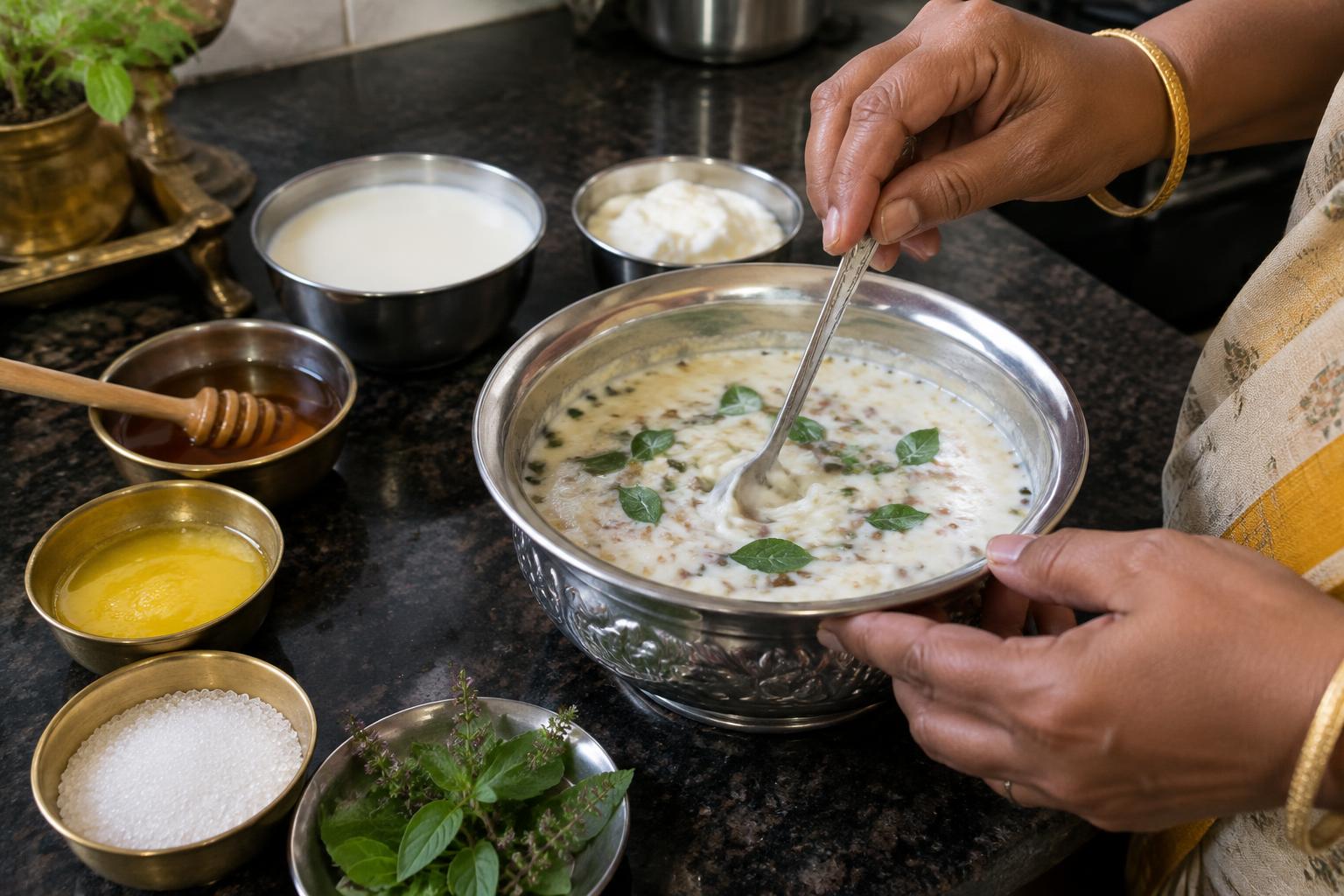 Samagri & products
Panchamrit recipe for puja: the five ingredients, quantities, the meaning, how it is used for abhishek and prasad.
Read guide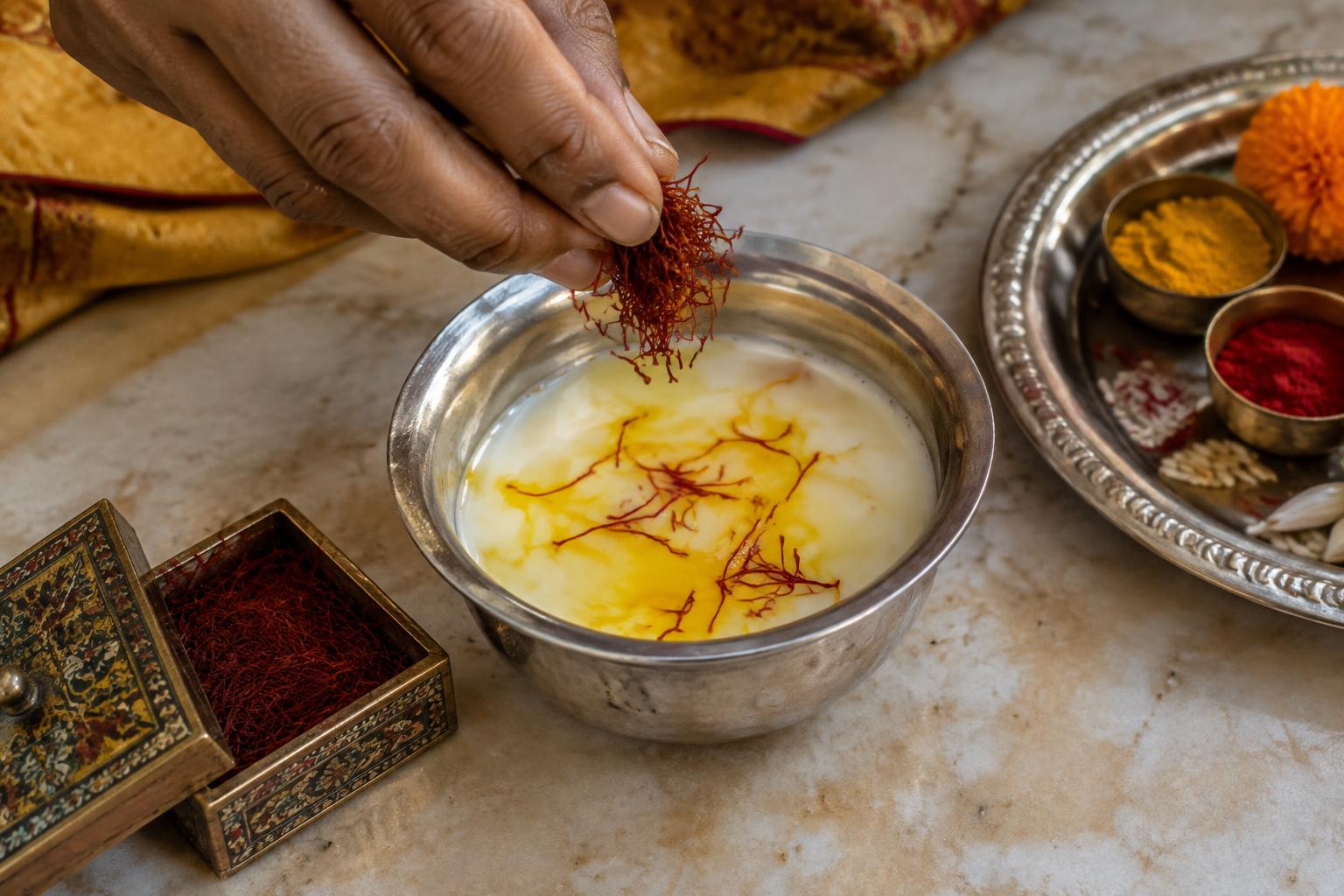 Samagri & products
Kesar for puja: where it is used, how to prepare it, and how to choose and store good saffron.
Read guide