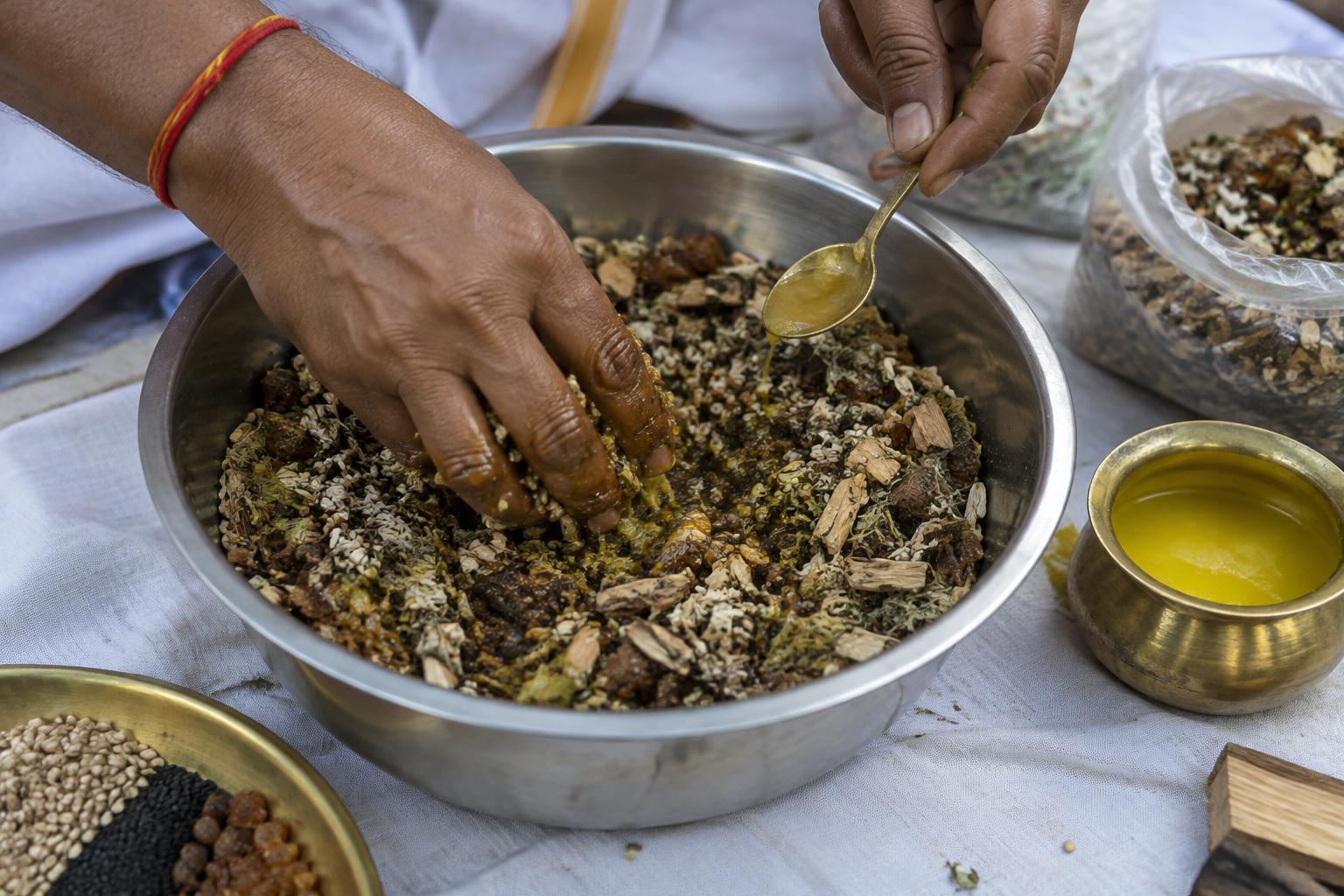
 Samagri & products
Hawan Samagri: What It Contains, How Much to Use and How to Use It
Hawan samagri explained: what it is made of, how much you need, how to offer it, and the other items needed for a havan.
Read guidePanditji at your home across India, or live on video anywhere in the world. Book Panditji


Samagri & products
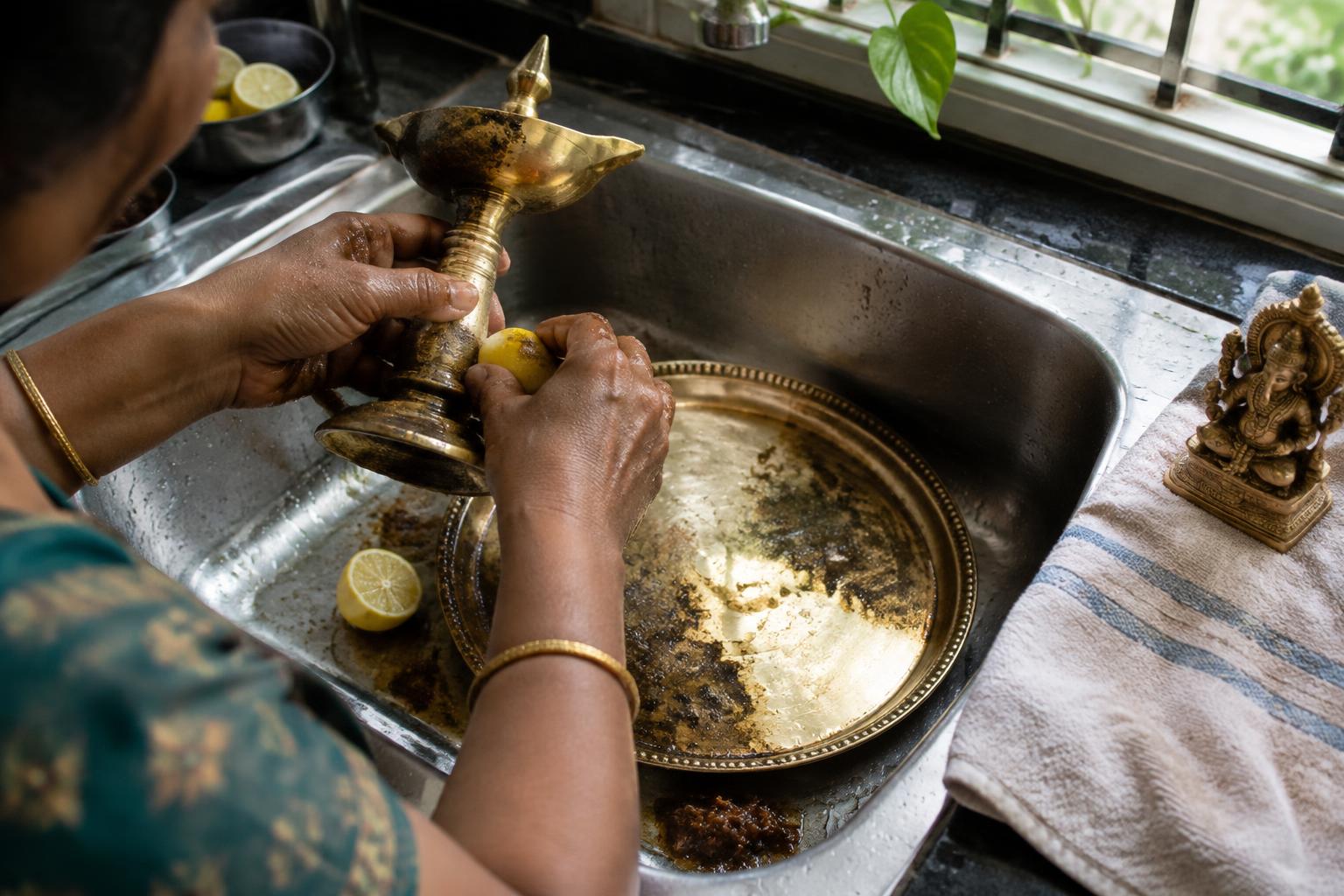
Brass turns dull with time, and ghee and oil leave marks on diyas and thalis. You can clean it at home with simple kitchen items. Before you begin, check if your piece is lacquered (shiny and smooth, with a coating) or plain, since lacquered brass should not be scrubbed hard.
Wipe off the loose residue with a tissue. Wash the item in warm water with a little dish soap, so that the oil does not mix with the cleaner. Dry it.
Use one method at a time, and do not mix cleaners.
Rinse in clean water, and dry fully with a soft cloth. Leaving water on brass leaves spots.
Use a soft toothbrush to reach the corners, and do not use hard scrubbers, which can scratch the detail. If the idol is worshipped daily, many families clean it on a fixed day, such as before a festival.
Wipe with a soft damp cloth and a drop of mild soap, and dry. Do not use acids, which can remove the coating.
Shop our brass diya, Lakshmi Ganesh, premium thali and brass ghanti. See also our guide to ghee or oil for a diya.
Wash off the oil with warm soapy water, then rub with lemon and salt or tamarind, rinse and dry.
Use lemon and salt, tamarind, or a paste of baking soda, then rinse and dry well.
Yes, lemon and salt or tamarind work for copper as well.
Wipe after each use, and polish once a month or before festivals.
Samagri & productsHawan samagri explained: what it is made of, how much you need, how to offer it, and the other items needed for a havan.
Read guide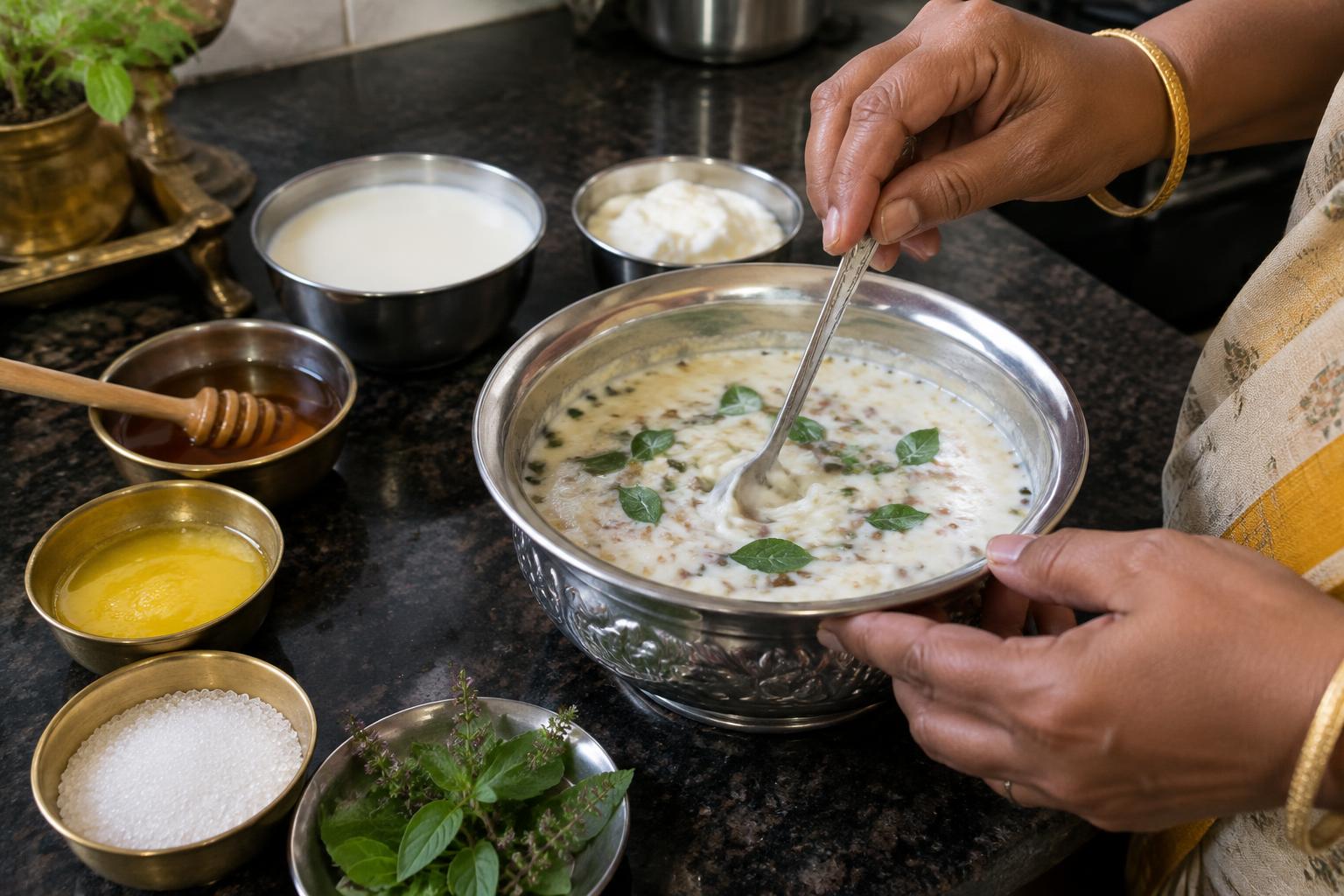 Samagri & products
Panchamrit recipe for puja: the five ingredients, quantities, the meaning, how it is used for abhishek and prasad.
Read guide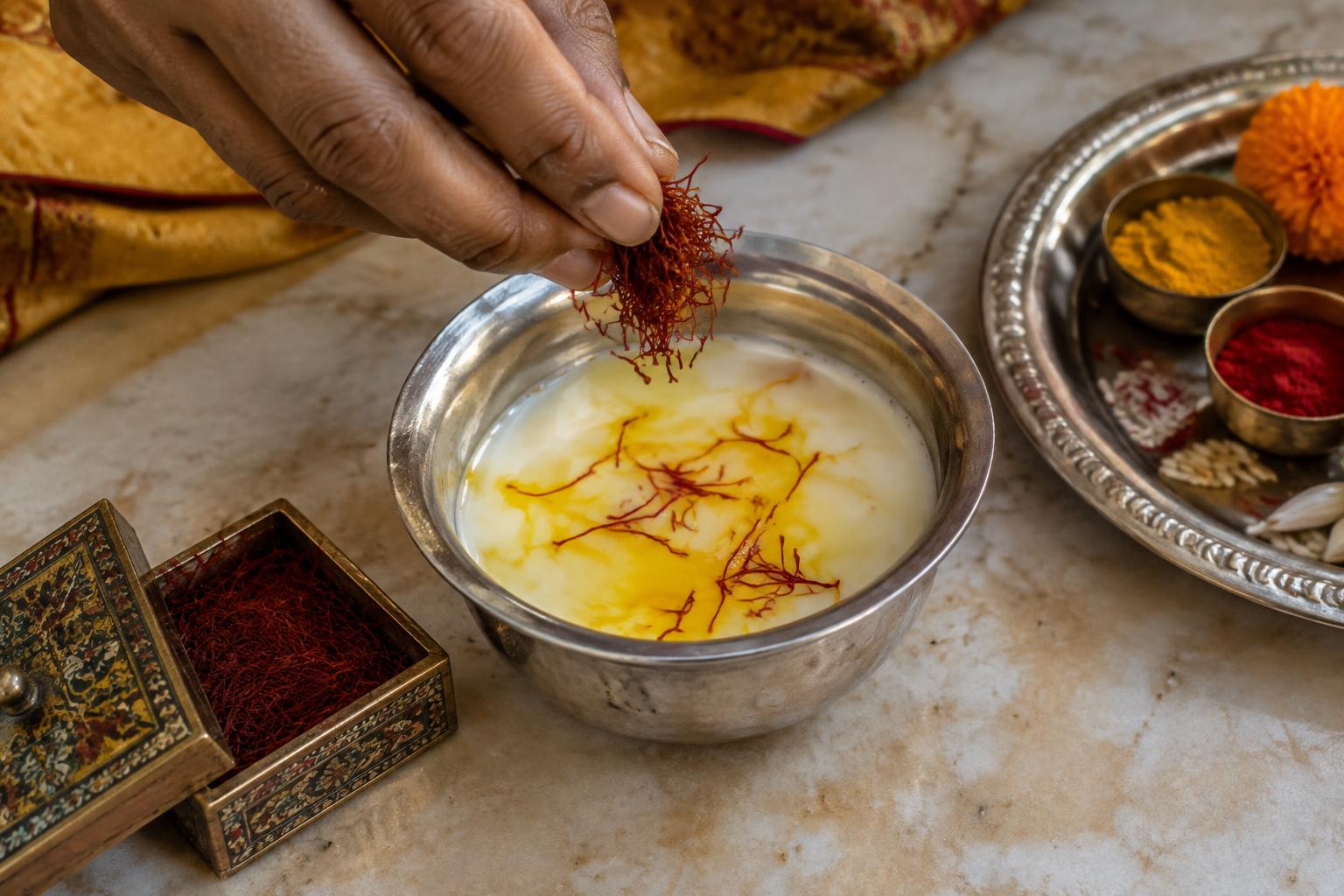 Samagri & products
Kesar for puja: where it is used, how to prepare it, and how to choose and store good saffron.
Read guide