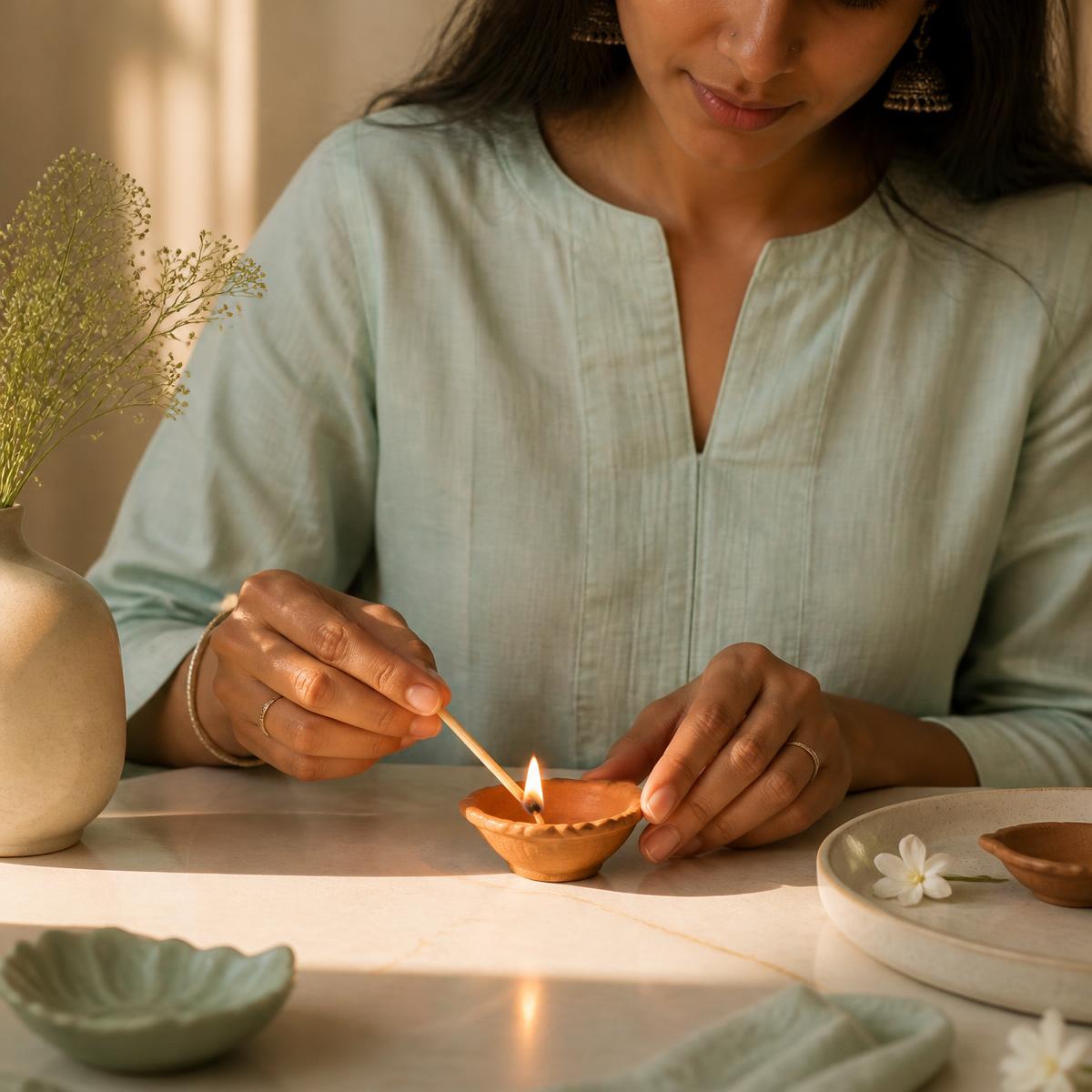
One market run too many
Four shops, ninety minutes, and a bag of things nobody could name.
The samagri packet we came home with had five items we didn't need, two we couldn't identify and a plastic sheet holding it all together. The instructions were a photocopy. We spent the morning of the festival sorting rather than sitting.
So we made our own box for the next one. Then friends asked for theirs. Ten festivals later, that is the whole company: the preparation is ours, the ritual stays yours.
Four things we don't negotiate
Assembled the week it ships
Nothing sits in a warehouse absorbing dust. Incense arrives fragrant, flowers arrive fresh, clay arrives unchipped.
No plastic filler, ever
Paper shred, cotton bags, glass jars and clay. If a component only exists to make a box look full, it doesn't go in.
The guide explains, never instructs
Each card says what a step means and where it came from, so you can keep the parts you grew up with and skip the rest.
Paid before dispatch
Every artisan we work with is paid on delivery of their batch, not on sale of ours. It is the least interesting promise we make and the one we're proudest of.
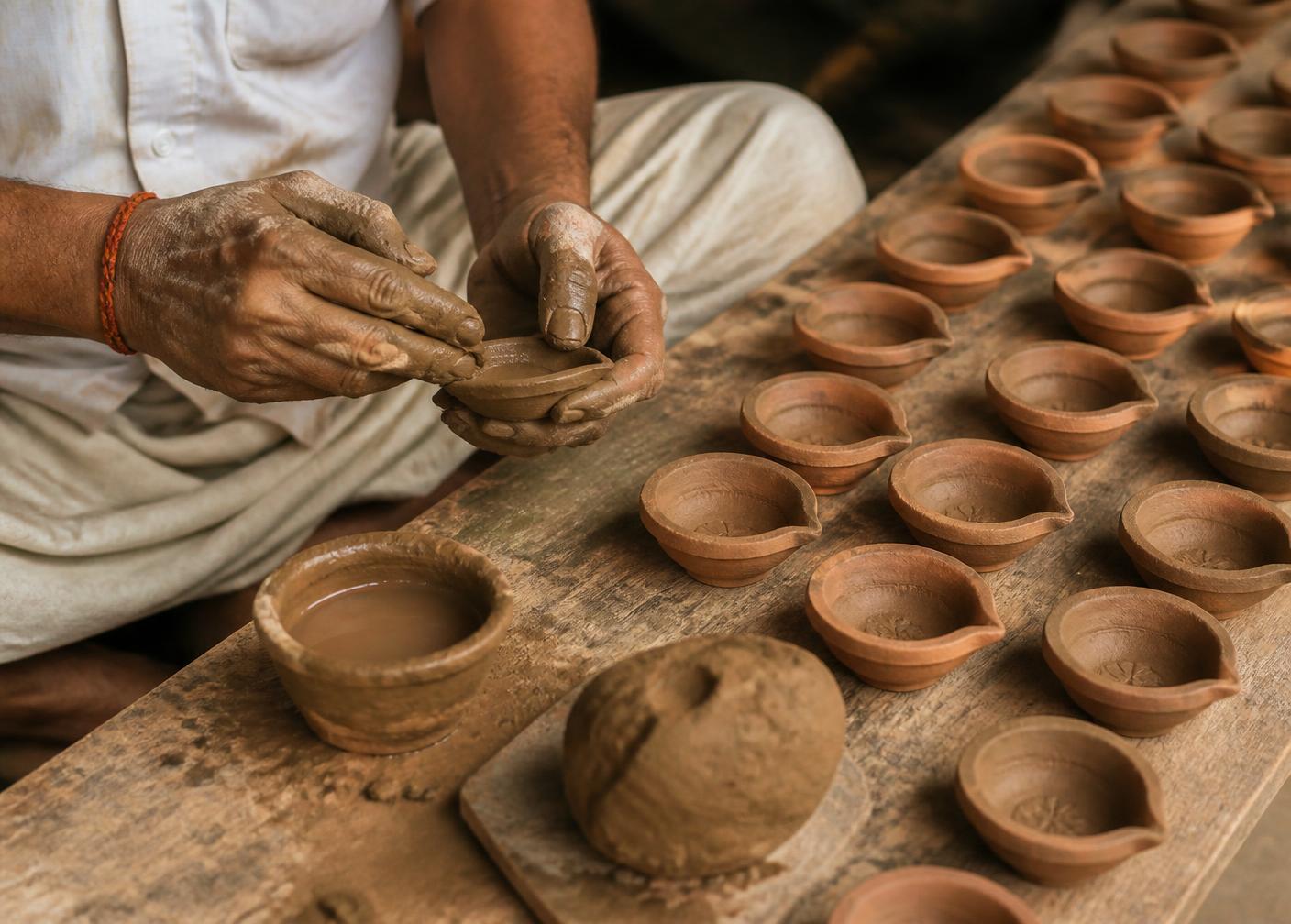
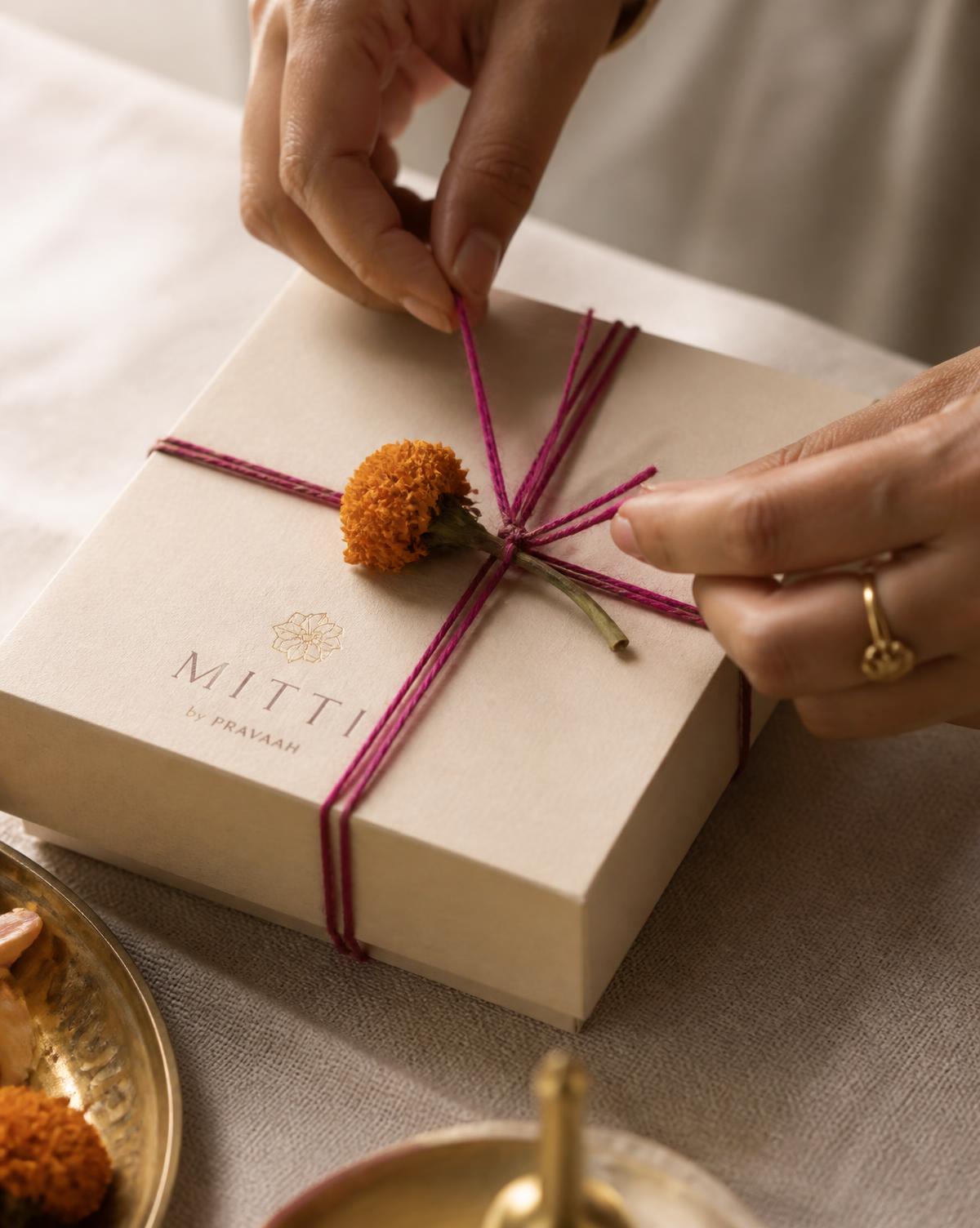
Everything in the box either dissolves, composts, or gets used again next year.
Four hands touch it
before yours do.
01Sourced
4 workshopsClay from Khurja, brass from Moradabad, cotton from Erode. Small workshops, repeat orders, fair rates.
02Checked
3-point checkEvery diya rung for cracks, every jar weighed. Anything chipped goes back, not into a box.
03Assembled
Made to orderPacked the week of your festival — never sitting in a warehouse waiting for a season.
04Tied
By handKraft board, magenta thread, a dried marigold, and your note if you left one at checkout.
Kits first, then the everyday
Ten festivals is the beginning of the calendar, not the end of the idea.
Festivals are punctuation. What we're building towards is the sentence between them — the evening lamp, the Thursday incense, the small refills that keep a shelf in use rather than in storage.