 Festivals
भूमि पूजन सामग्री लिस्ट और विधि
भूमि पूजन सामग्री की पूरी लिस्ट, पूजन की विधि और नींव में रखी जाने वाली चीज़ें।
Read guidePanditji at your home across India, or live on video anywhere in the world. Book Panditji


Samagri & products
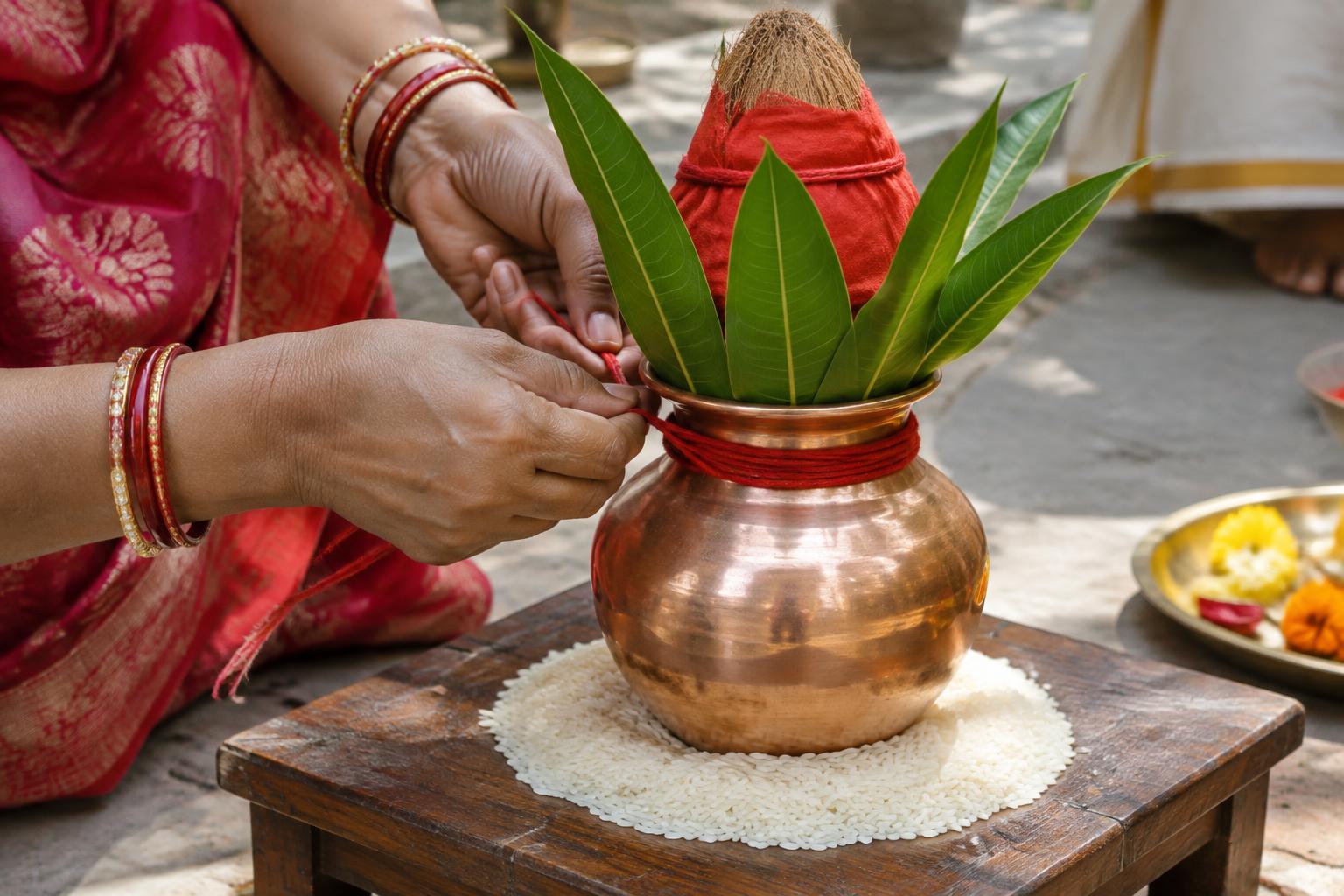
A kalash is a pot filled with water and topped with mango leaves and a coconut. It is installed at the start of many pujas, such as Navratri, Griha Pravesh and Satyanarayan, as a symbol of the deities and of abundance. This guide shows how to set it up. Practices vary by family, so follow your own tradition.
You can buy a copper kalash, the roli, kumkum, haldi and akshat set, gangajal, barley seeds, moli and red cloth from our store.
The kalash is usually placed in the north-east or north of the puja space, or to the right of the main deity. Your Pandit Ji will advise for your puja.
See how it is used in our Navratri guide and Griha Pravesh guide.
A kalash, water, mango leaves, a coconut, roli, akshat, moli, a coin and supari, and rice or barley for the base.
Copper and brass are traditional. A clay kalash is also used. Choose what your family follows.
North-east or north, or to the right of the main deity, as advised by your Pandit Ji.
Many families keep it until the puja ends, then sprinkle the water around the house or on plants, and keep the coconut as prasad or immerse it, as per the family custom.
Festivalsभूमि पूजन सामग्री की पूरी लिस्ट, पूजन की विधि और नींव में रखी जाने वाली चीज़ें।
Read guide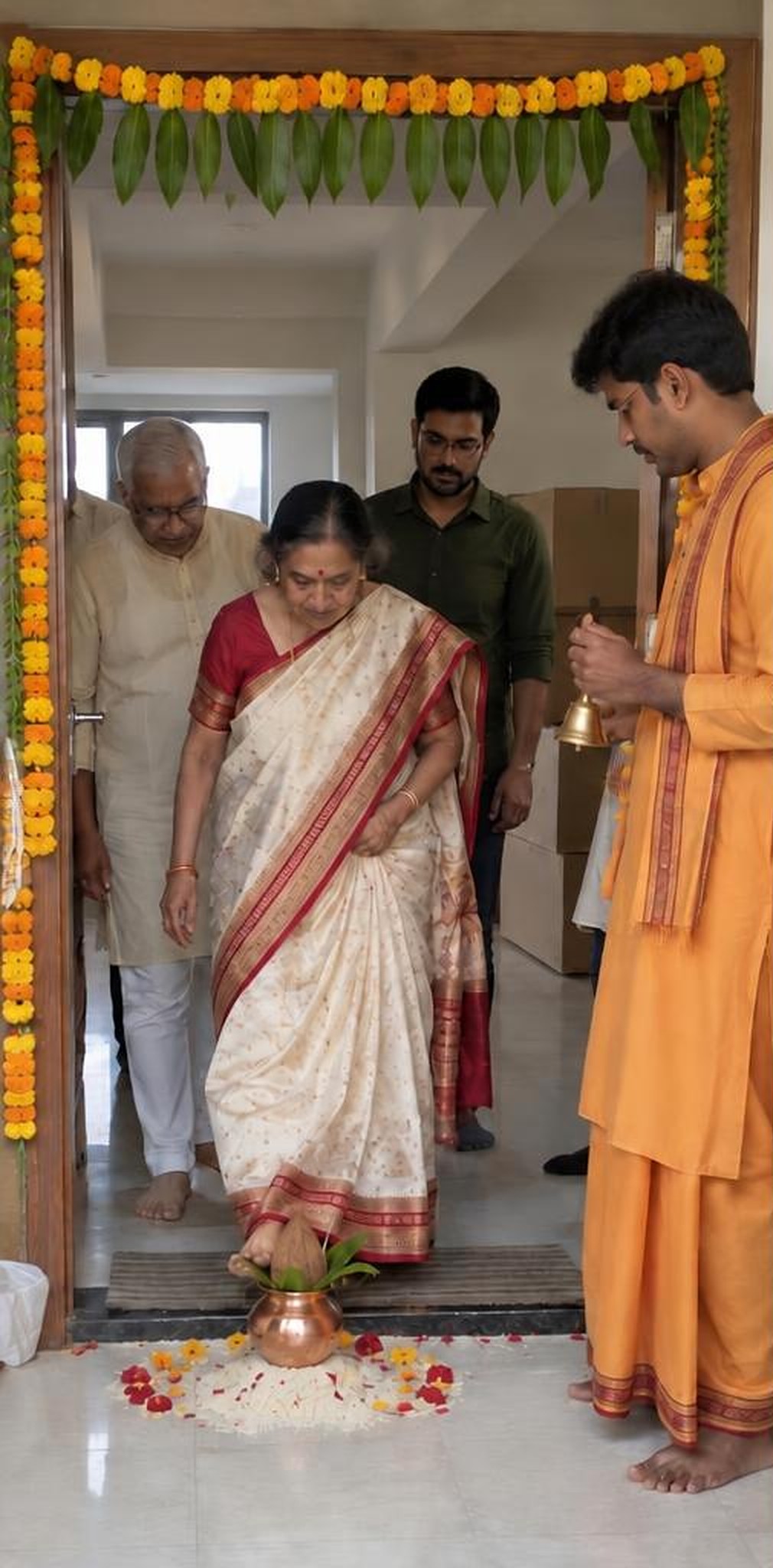 Festivals
गृह प्रवेश पूजा सामग्री लिस्ट, पूजा की विधि, कलश, हवन और दूध उबालने की रस्म।
Read guide हिन्दी
हवन सामग्री की पूरी लिस्ट, घर पर हवन करने की विधि, हवन कुंड, समिधा और सावधानियाँ।
Read guide