Panditji at your home across India, or live on video anywhere in the world. Book Panditji

Navratri Puja Samagri List and Kalash Sthapana Vidhi

Puja guides

Navratri Puja Samagri List and Kalash Sthapana Vidhi

Book a Pandit Ji

Festivals

Navratri is the nine nights devoted to Goddess Durga. It is observed twice a year, as Chaitra Navratri in spring and Sharad Navratri in autumn, and the puja is the same in both. It begins with kalash sthapana (also called ghatasthapana) on the first day, followed by daily worship and, on Ashtami or Navami, kanya pujan. This guide gives you the samagri list, the vidhi and the basics of the fast. Traditions vary by region and family, so follow your own where it differs.

01

Dates and muhurat

Navratri begins on the pratipada tithi of the bright half of Chaitra or Ashvin, and the dates change every year. Kalash sthapana is done at a muhurat on the first morning. Check your local panchang for the exact date and muhurat, or ask your Pandit Ji.

02

Navratri puja samagri list

  • Durga idol or picture, and a red or yellow cloth for the altar
  • Earthen pot or tray, clean soil and barley (jau) seeds for the sacred sowing
  • Kalash filled with water, with mango leaves, a coconut wrapped in red chunri, a coin and supari
  • Roli, kumkum, haldi, akshat and moli
  • Red flowers, especially hibiscus, and a garland
  • Diya, ghee and wicks, and an akhand jyot if you keep a lamp lit for nine days
  • Incense, camphor and dhoop
  • Gangajal
  • Fruits and sweets for the bhog
  • Durga Saptashati or Durga Chalisa for the daily path
  • For Ashtami or Navami, items for kanya pujan: halwa, chana, puri and small gifts

Our Navratri Pooja Kit packs the samagri for the puja. You can also buy barley (jau), an akhand jot stand, a copper kalash and a Durga Saptashati booklet. For Ashtami, see the Durga Ashtami Kanya Pooja Kit.

03

Kalash sthapana vidhi

  1. 01
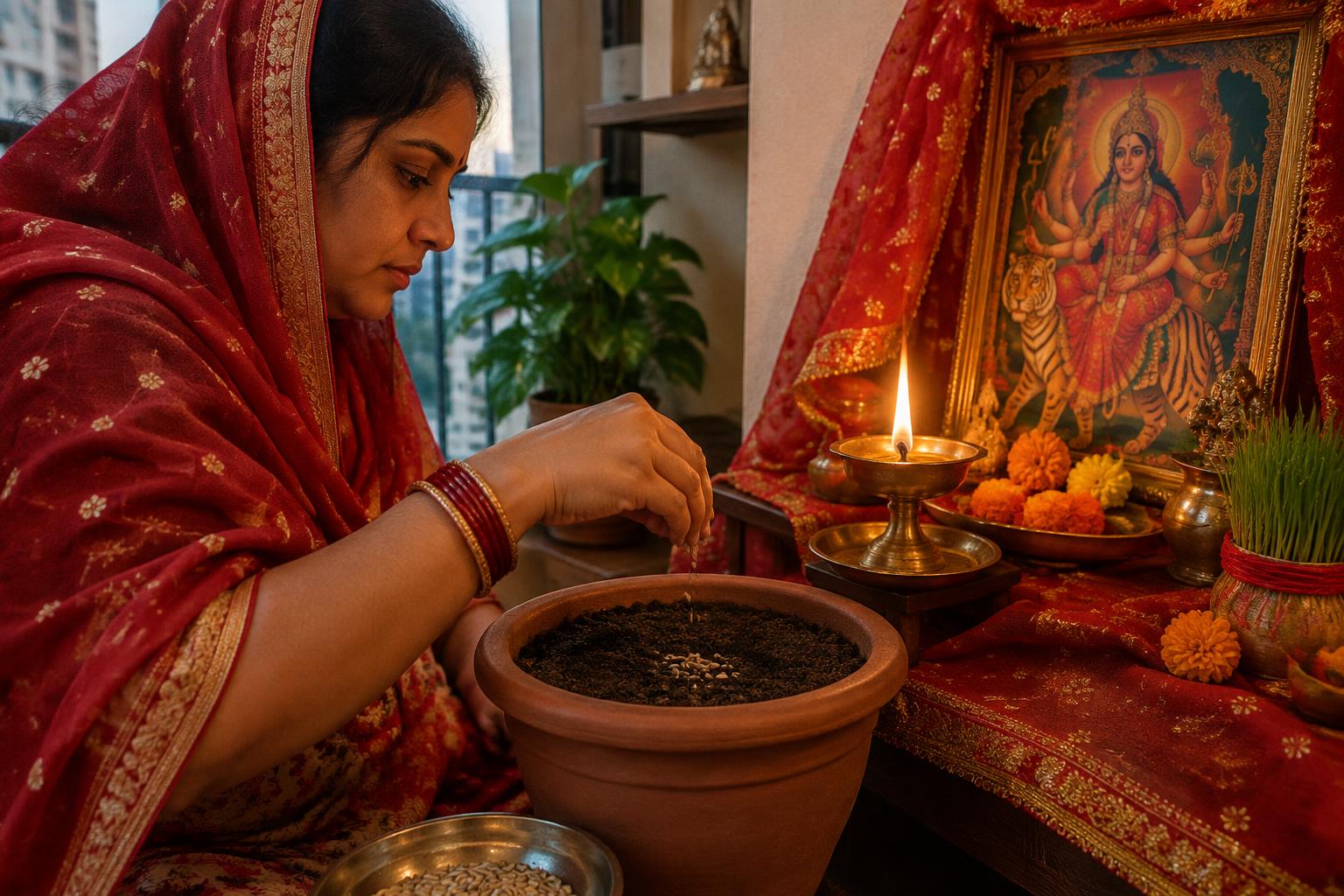
    Prepare the place. Clean the altar space and spread a cloth. Take a shallow earthen pot or tray.
  2. 02
    Sow the jau. Put a layer of clean soil, scatter the barley seeds, add a little more soil and sprinkle water.
  3. 03
    Set the kalash. Fill the kalash with water and a few drops of gangajal, and tie moli around its neck. Place supari and a coin inside, and put mango leaves at its mouth.
  4. 04
    Place the coconut. Wrap the coconut in a red chunri, tie it with moli and place it on the mango leaves.
  5. 05
    Install the kalash on the soil, in the northeast of the altar if you can.
  6. 06
    Worship. Light the diya, offer tilak, flowers and akshat, invoke Ganesha first and then the Goddess, and do the aarti.
  7. 07
    Akhand jyot. If your family keeps one, light it now, and keep it burning through the nine days.
04

Daily worship

For the next eight days, bathe and clean the altar, offer fresh flowers, light the diya, read or listen to a part of the Durga Saptashati or the Durga Chalisa, and do the aarti. Water the jau lightly each day. Each day is associated with a form of the Goddess, and many families offer a particular colour or bhog on each day.

05

Fasting basics

Many families keep a fast for all nine days or only on the first and last. A simple sattvik diet is followed, without onion, garlic or grains in many homes, and with fruit, milk, sabudana, kuttu or singhara flour. Customs differ widely, so follow your family's.

06

Kanya pujan on Ashtami or Navami

On Ashtami or Navami, nine young girls are invited, their feet are washed, they are given tilak and fed halwa, chana and puri, and given small gifts. A boy is often invited as well, as Langur. See the kanya pujan guide and the Durga Ashtami Kanya Pooja Kit.

07

Ending the nine days

On the last day, the jau is offered as prasad, and the kalash water is sprinkled around the house. Many families do a short havan on Navami.

08

With a Pandit Ji

If you want the full puja with the correct mantras, book a Pandit Ji for Navratri puja, at your home in Gurugram or Delhi, or by live video. Our festival and deity pujas page has more.

09

Frequently asked questions

What is needed for Navratri puja?

A Durga idol or picture, a kalash with a coconut, jau for sowing, roli, kumkum, akshat, moli, red flowers, a diya with ghee, camphor, incense, gangajal and bhog. The full list is above.

What is kalash sthapana?

It is the installation of a sacred pot on the first day of Navratri, which represents the Goddess, done at a muhurat with soil and barley, a water-filled kalash and a coconut.

When is kalash sthapana done?

On the first morning of Navratri, at the muhurat for your city. Check a local panchang or ask a pandit.

Why do we sow barley in Navratri?

The jau is sown on the first day as a symbol of growth and prosperity, and the way it grows over nine days is looked at as a sign of blessings.

Can I keep akhand jyot without a pandit?

Yes, but it must be kept burning for nine days, so make sure someone can tend to it. You can use an akhand jot stand that keeps the flame steady.

Can I book a Pandit Ji for Navratri on video?

Yes. The Pandit Ji performs the puja with you by live video, and you arrange the samagri at your end. In person, we serve Gurugram and Delhi.


Book a Pandit Ji

Navratri Puja with Pandit Ji

From ₹5,383

Book a Pandit Ji

Get the kit

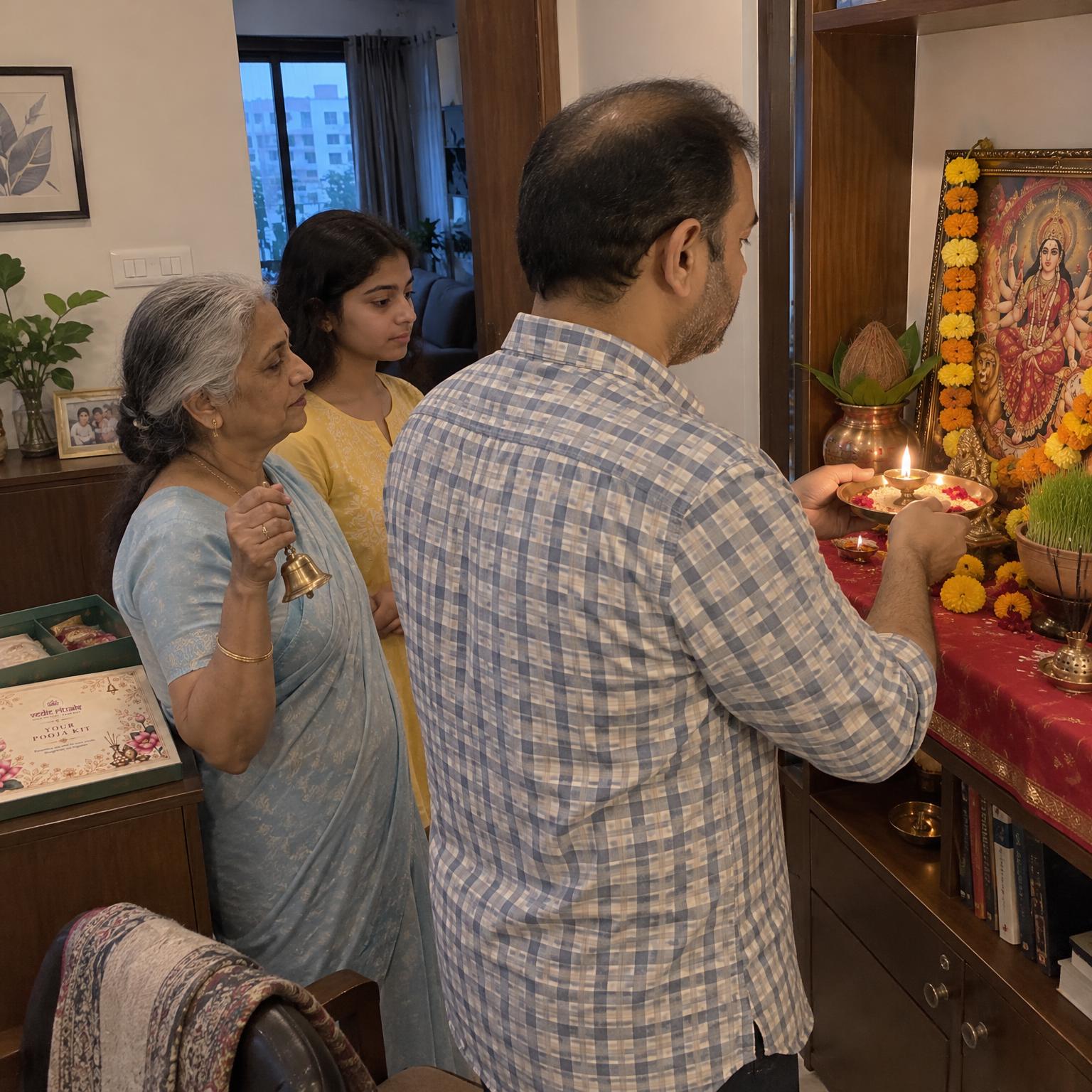
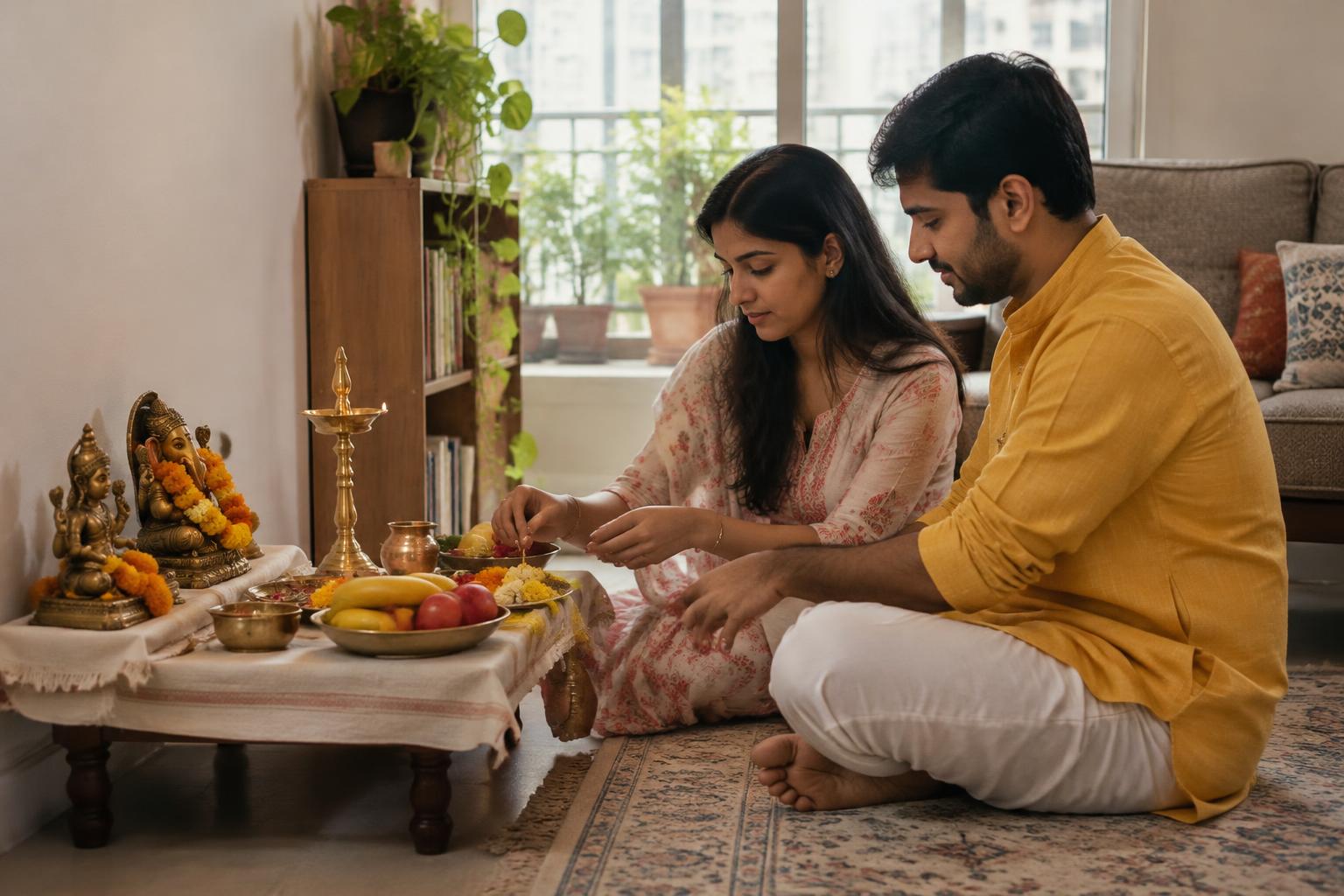
A family performing Navratri pooja at home with the Navratri Pooja Kit
26% offPanditJi
Approved
Festival Kits

Navratri Pooja Kit

Navratri33 items in the boxOctober

Nine nights, one steady lamp, and every detail ready before the first morning.

11 October 2026
Dispatches in 48 hours · Delivered in about 3 days

Order now for this festival

4.6 (8)Printed guide
From₹3,067₹4,140
Get the kit

Related guides