Panditji at your home across India, or live on video anywhere in the world. Book Panditji

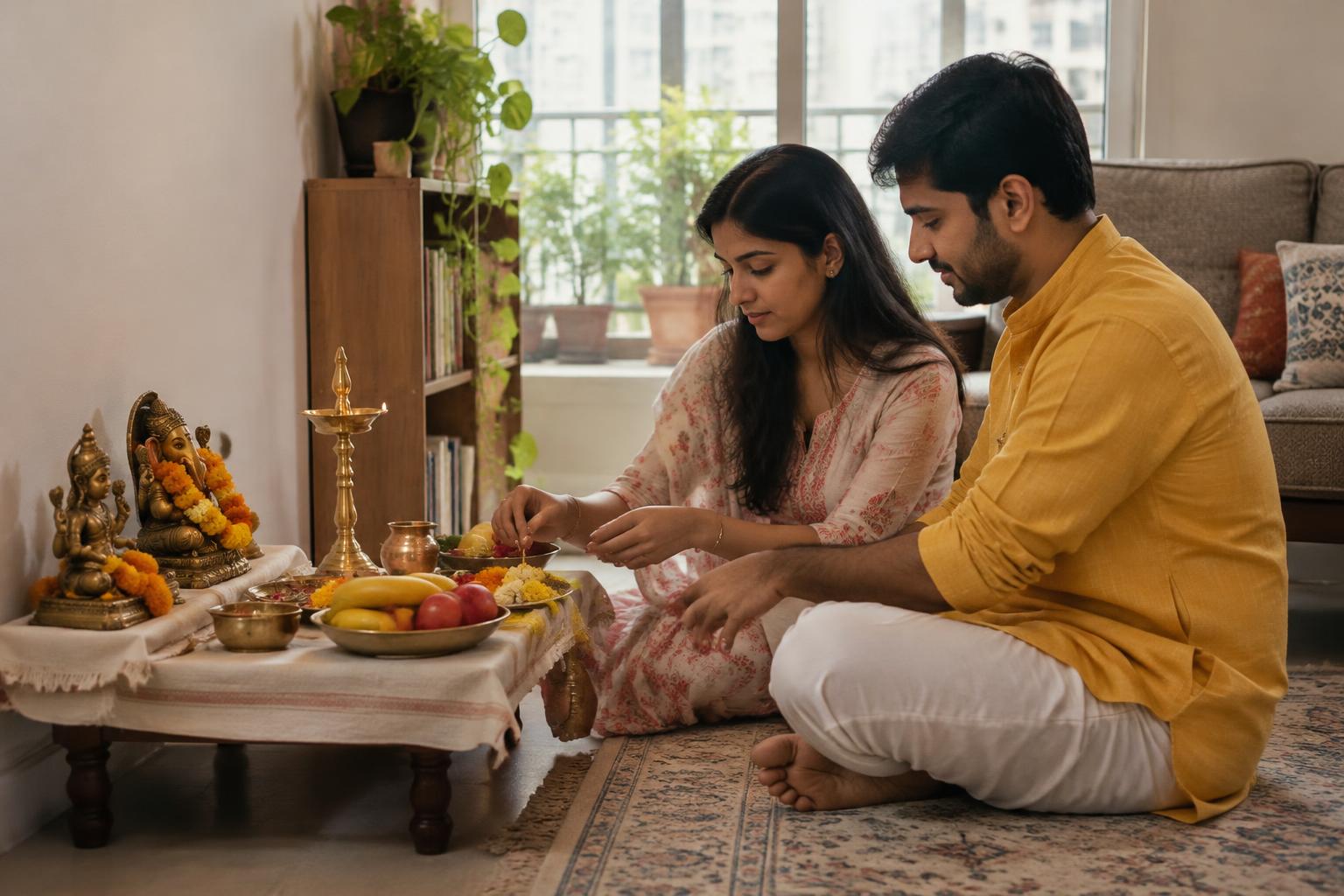
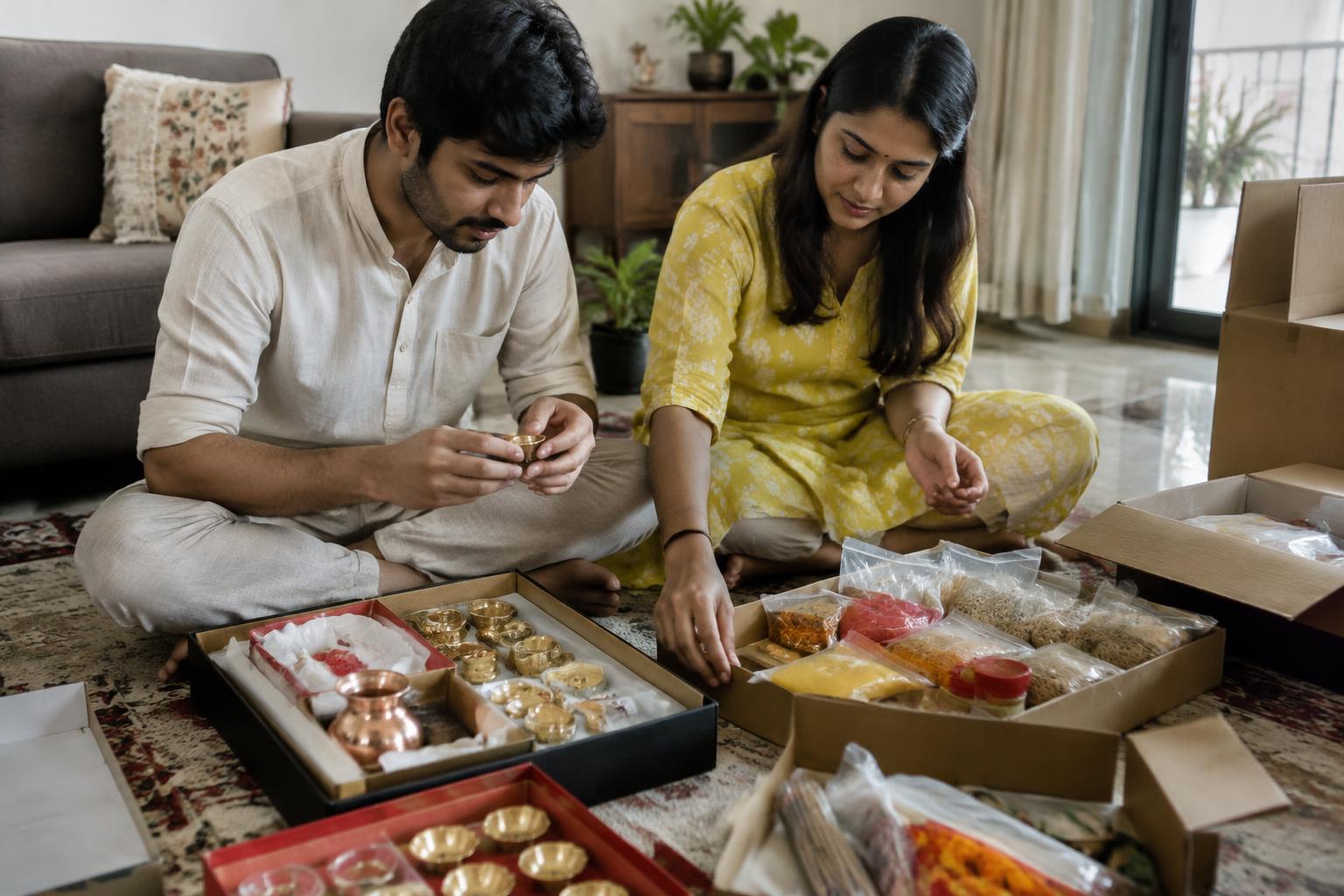
A couple preparing flowers and prasad for a puja in their home

Puja guides

Puja for Beginners: How to Do Your First Puja at Home

Book a Pandit Ji

Your first puja at home

You do not need to be an expert to do a puja at home. What matters most is sincerity and cleanliness. This guide gives a simple routine for a first-time puja, and tells you when it is wise to call a Pandit Ji. Traditions differ by family, so follow what your elders do where it differs.
01

What you need

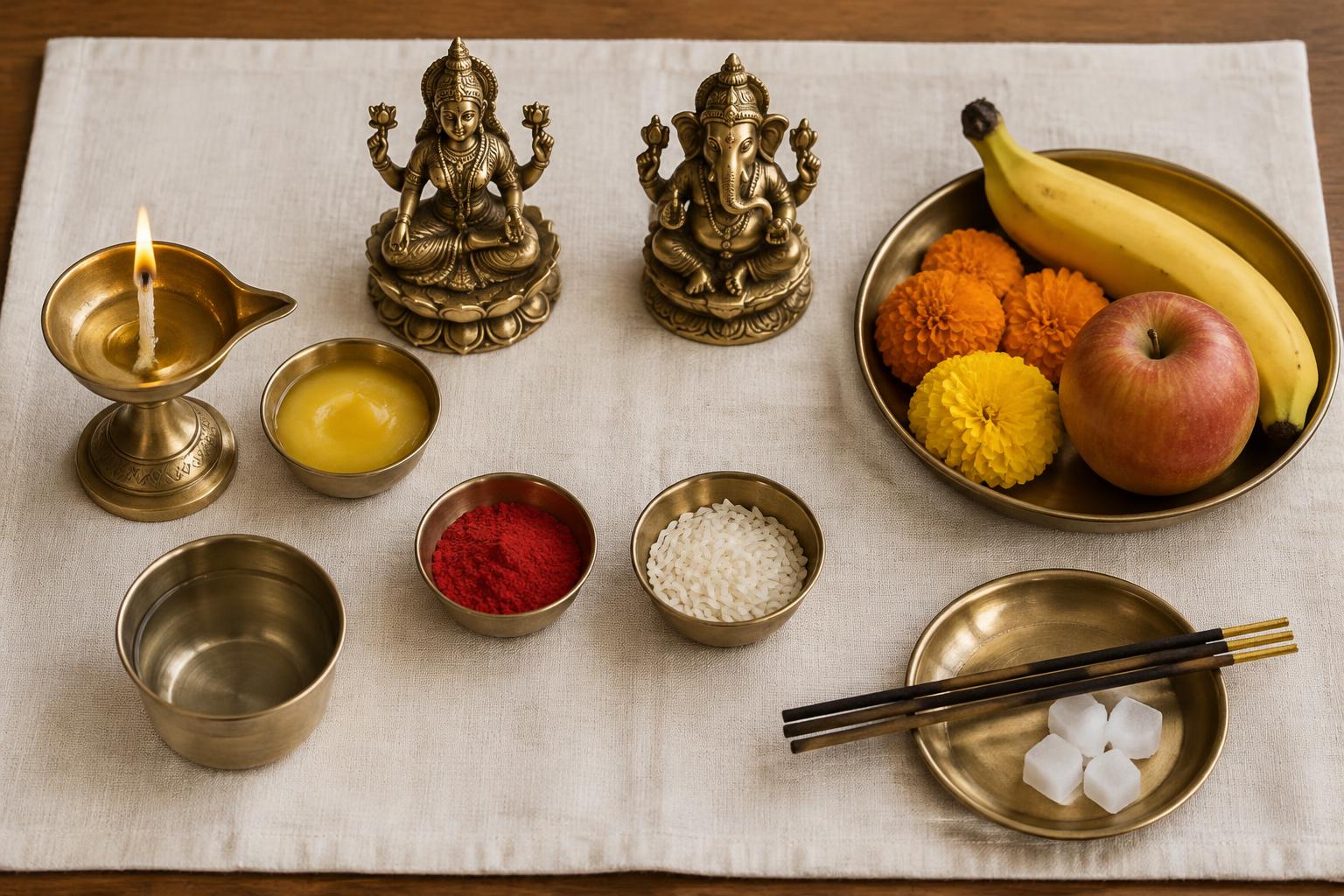
Puja essentials arranged on a clean cloth, with numbered markers matching the list
A simple home puja setup
  1. 01

    A clean place

    A clean place, and a small platform or a clean cloth
  2. 02

    Your deity

    A picture or idol of the deity you worship: Lakshmi Ganesh is a common start
  3. 03

    Diya, ghee & wick

    A diya, ghee and a wick: brass diya, ghee
  4. 04

    Roli & akshat

    Roli and akshat for tilak: complete set
  5. 05

    Incense & camphor

    Incense and camphor: camphor
  6. 06

    Flowers & prasad

    Flowers and a little prasad, such as fruit or sweets
  7. 07

    Water & gangajal

    A small bowl of water, with a drop of gangajal

See the full puja saman list, and a pooja thali guide.
02

A simple puja in 8 steps

  1. A couple preparing their home puja space
    01 — 02Prepare
    1. 01
      Clean and bathe. Wear clean clothes, and clean the puja place.
    2. 02
      Set up. Place the deity on the cloth. Sit facing east or north, if you can.
  2. Diya, water and the essentials for beginning a puja
    03 — 04Begin
    1. 03
      Light the diya and the incense.
    2. 04
      Sprinkle water with gangajal on yourself and the puja items, to purify.
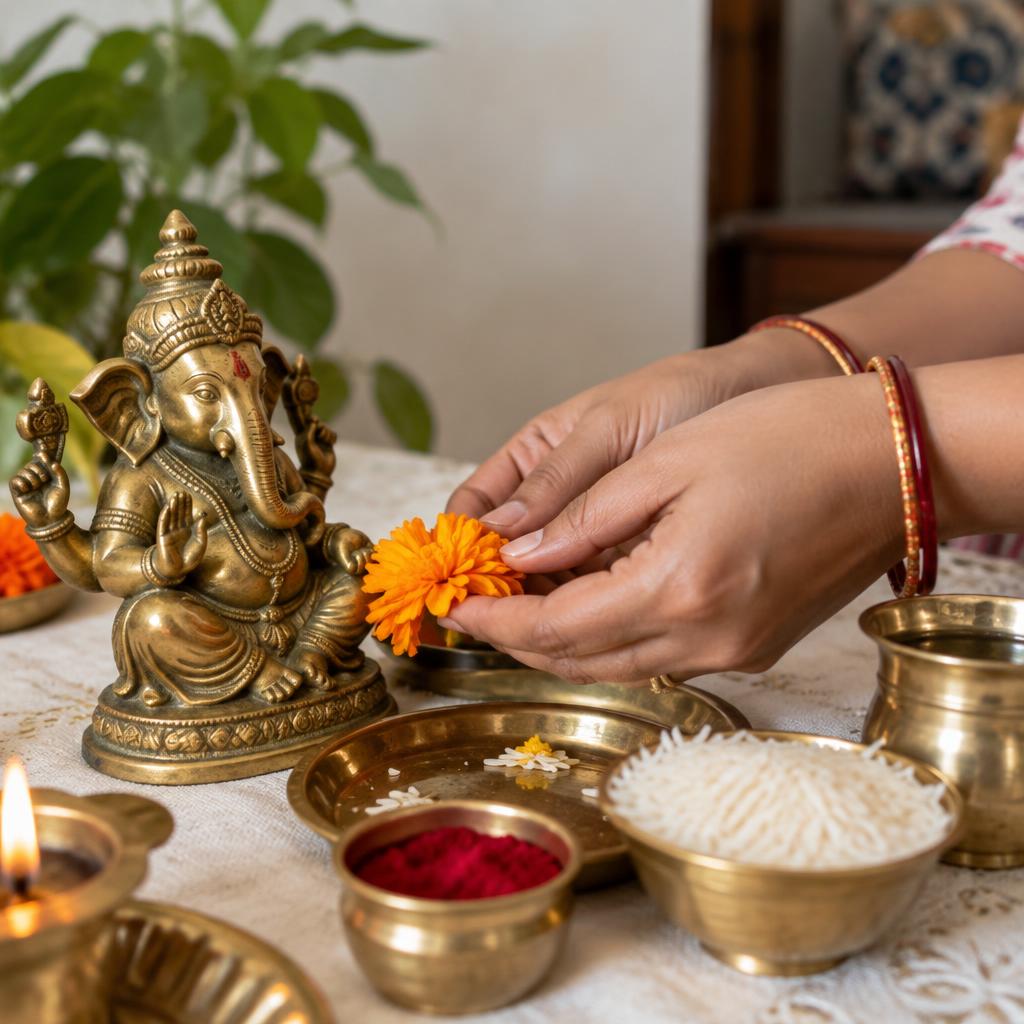
  3. Hands offering a marigold flower to Ganesha
    05 — 06Offer
    1. 05
      Invoke Ganesha. Apply a tilak of roli and a few grains of akshat, offer a flower and say "Om Gan Ganapataye Namah".
    2. 06
      Worship your deity. Apply a tilak, offer flowers, and the prasad, and say a prayer or a mantra you know.
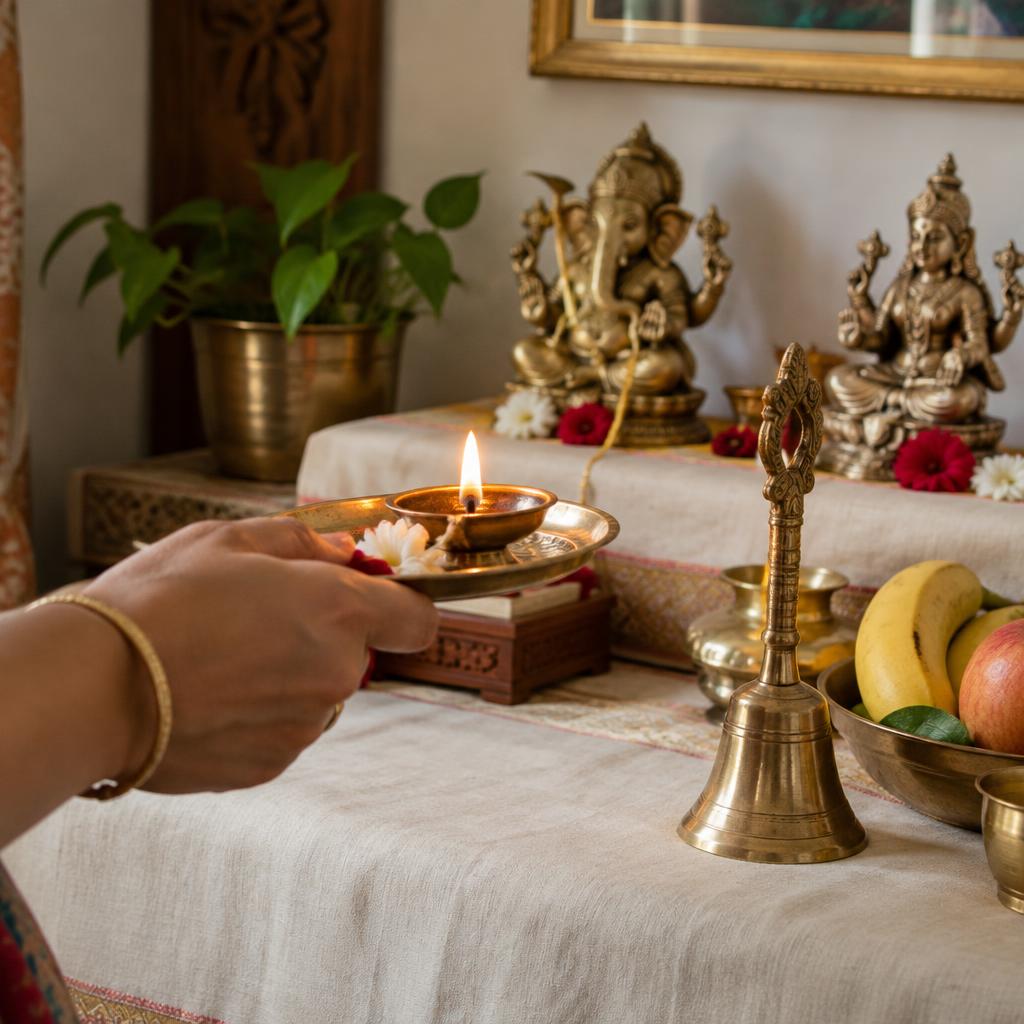
  4. Aarti plate, bell and fruit offered at a home puja
    07 — 08Aarti & prasad
    1. 07
      Aarti. Light the camphor, ring a bell, and wave it in front of the deity.
    2. 08
      Share the prasad, and thank the deity.

Common doubts

  • Do I need to know Sanskrit mantras? No. A prayer in your own words, or a simple mantra or the aarti, is accepted. A Pandit Ji recites the formal mantras for bigger pujas.
  • Can anyone do puja, including women and children? Yes. Families follow their own customs, and many involve everyone.
  • What if I make a mistake? Sincerity matters more than perfection. Ask for forgiveness at the end of the puja, as many families do, and continue.
  • Is a daily puja necessary? No. Do what suits you, even a diya and a short prayer each day.
  • Which direction? The north-east or east is preferred, but not required.

When to call a Pandit Ji

For bigger or one-time occasions, such as Griha Pravesh, a naming ceremony, a havan, a Satyanarayan katha or a puja with specific mantras, it is better to have a Pandit Ji, so the ritual is done properly and the family can be present. Read what to expect when a Pandit Ji visits and how to choose one, or book a Pandit Ji at home or on video.

Frequently asked questions

How do I do a puja at home for the first time?

Clean the space, set up the deity, light a diya, invoke Ganesha, offer flowers and prasad, do the aarti and share the prasad.

Do I need a Pandit Ji for puja at home?

Not for a daily puja. For bigger occasions with specific mantras, a Pandit Ji is recommended.

What are the basic items for puja?

A diya, ghee, roli, akshat, flowers, incense, camphor, water and prasad.

Can I do puja without knowing mantras?

Yes. A prayer in your own words or a simple aarti is accepted.

Related guides